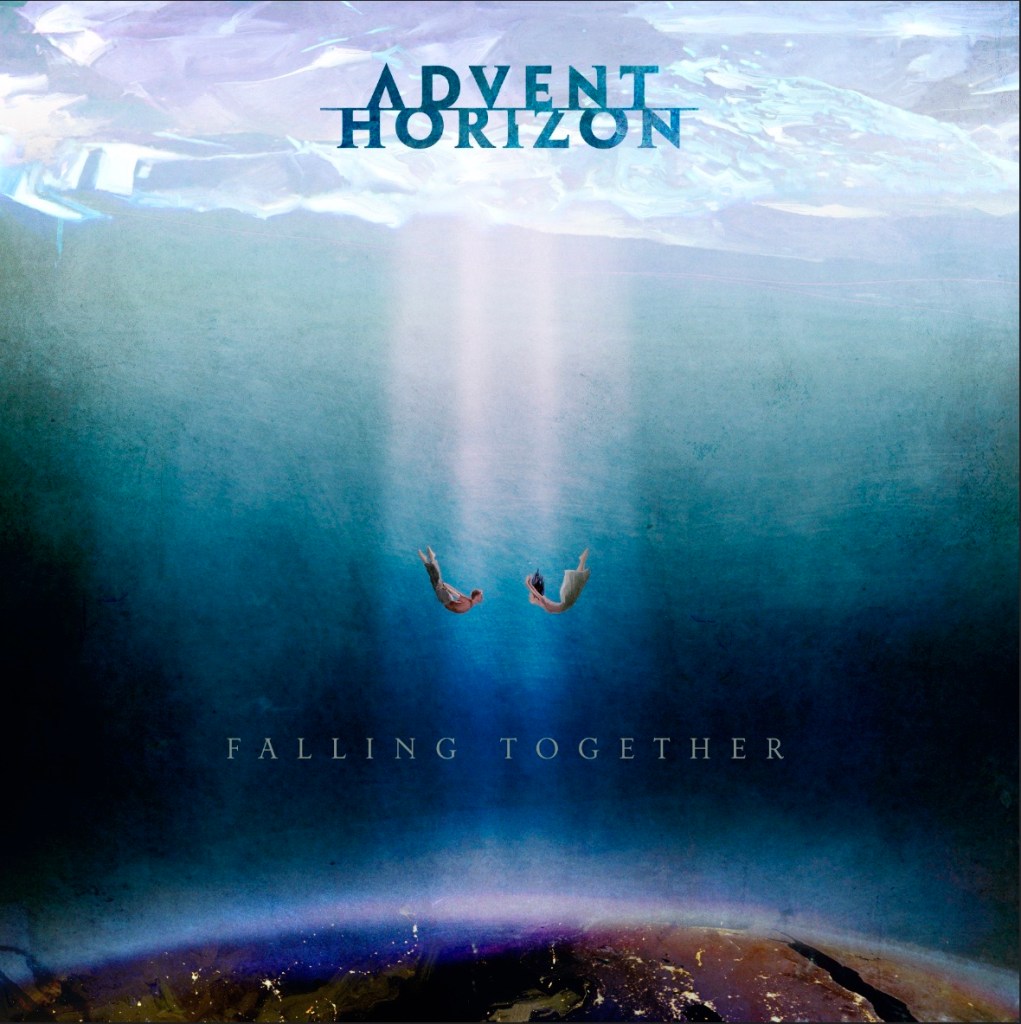
Utah-based Advent Horizon has always been a favorite here at Proglodytes. They had the honor and distinction of being our very first Proglodytes Podcast interview, and their song, “Invasion Theorem”, has been our podcast theme song ever since then. While we loved them then, they have only gotten better and better as the years have passed. Their last album, A Cell to Call Home, was a critical success, earning accolades from most major progressive music outlets, as well as a coveted spot in the lineup for ProgStock 2024. This year, they are releasing their much-anticipated follow up, Falling Together, and we couldn’t be more excited.
This album takes on an intensely personal theme for Advent Horizon. From their website: “For me personally, these songs have been a look inside myself. An introspection into my past, my present, and my future. An attempt at putting into words my feelings about my religious upbringing and my gradual path away from organized religious beliefs over the past decade.” All of the band members have a personal connection to this theme, as they have each been shaped by their decisions to forge their own path. These intense and timely themes are explored in-depth on Falling Together, an incredibly personal and powerful offering from Advent Horizon. I caught up with Rylee McDonald, primary songwriter from Advent Horizon, to ask him some questions about the band.
This album seems intensely personal, as it describes a powerful journey of self discovery. You also mentioned this album was written in distinct phases, first in 2018-2021, and then revisited in 2024. How did your journey and intentions change over that time period?
Back in 2018, we were working on the material that would become A Cell to Call Home. During those writing sessions, I came up with a few riffs that really stood out to me. They were catchy, heavy, and headbangable. It was a direction I knew I wanted to take this band in, as at the time I had been really getting into Haken, Leprous, Between the Buried and Me and other similar artists. However, as excited as I was for these ideas, I knew they didn’t quite fit the tone of the other music I was working on at the time. So, I set them aside knowing that once A Cell To Call Home was released, I now had a foundation to work off of for our 4th album.
Around this same time, in my personal life I was going through some significant changes. Between 2017 and 2019, Kristen and I made the choice to distance ourselves from the religion that we were born into (The Church of Jesus Christ of Latter Day Saints, or Mormonism). This change in faith led us to the realization that so many of the decisions we had made in our lives had been guided not by our own careful planning and logic, but by the expectations that had been placed upon us by our religious community. Now, distanced from that community, we felt the need to discover for ourselves who we truly were – independent of any outside influence.
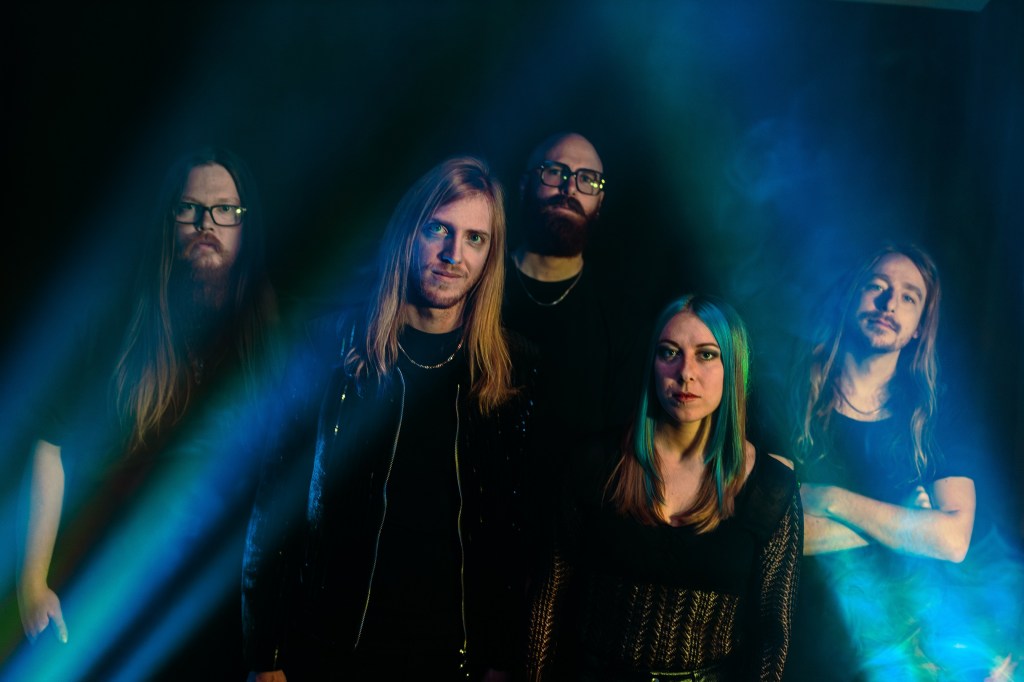
While this was exciting and liberating, it was also a bit terrifying and overwhelming, as it made us question every major life decision we had made up to that point. It was a time of uncertainty, but also of great growth for both of us individually, and as a couple. We got married very young (as is typical in the Mormon religion), and we had to take time to determine whether our love for each other was genuine, or whether we had just gotten married hastily at the first opportunity like so many other young couples around us. During those couple of years, we spent a lot of time together, traveling the country, experiencing the world, and re-discovering each other. I’m happy to say that through this shared experience, rather than growing apart, we instead found a new strength and stability in our relationship, greater than anything we had ever before experienced. I now believe that our decision to shed our religious past was the smartest decision we ever made as a couple. This is where the inspiration for the new album’s title Falling Together comes from, as we both “fell” from our religious past, but we also “fell together” like puzzle pieces in the process.
Through these years of personal change and growth, I found myself occasionally scrawling down lyrical phrases related to my personal life that would pop into my mind. Lines like “flying high on bread and wine”, “this temple has it’s charm, but it’s meaningless to me”, “when indoctrination’s given, what’s free thought, but a method to ensure you’ve heard what’s been taught” came to me around this time, and I set them all aside knowing they’d be used later, as obviously they didn’t quite fit the subject matter of A Cell To Call Home.
So, in 2024 When the time came to begin seriously working on our 4th album, I already had a musical foundation AND a lyrical foundation to work from. The riffs I had written back in 2018 became the epic intro track “In a Lone and Dreary World”, and using that song as a tonal template, it didn’t take long at all to craft several other songs that fit nicely with the theme. We ended up opting for an album layout very similar to Rush’s 2112, where the first track is an epic piece that tells a specific narrative story, and the rest of the album is a collection of songs that each elaborates upon an idea that’s touched upon in the first track.
As the album follows more of a concept, what do you feel comfortable sharing as far as the inspiration or meaning for each song?
“In a Lone and Dreary World” is a concept piece about a character who grows up in a sheltered community, with a tradition of hiding themselves away from the rest of the world. As the character grows, they realize that the world has much more to offer, and they decide to venture out to experience for themselves the “lone and dreary world”. Through their travels, they learn that the world can indeed be treacherous, but it is also beautiful, exciting, and diverse, and absolutely worth experiencing.
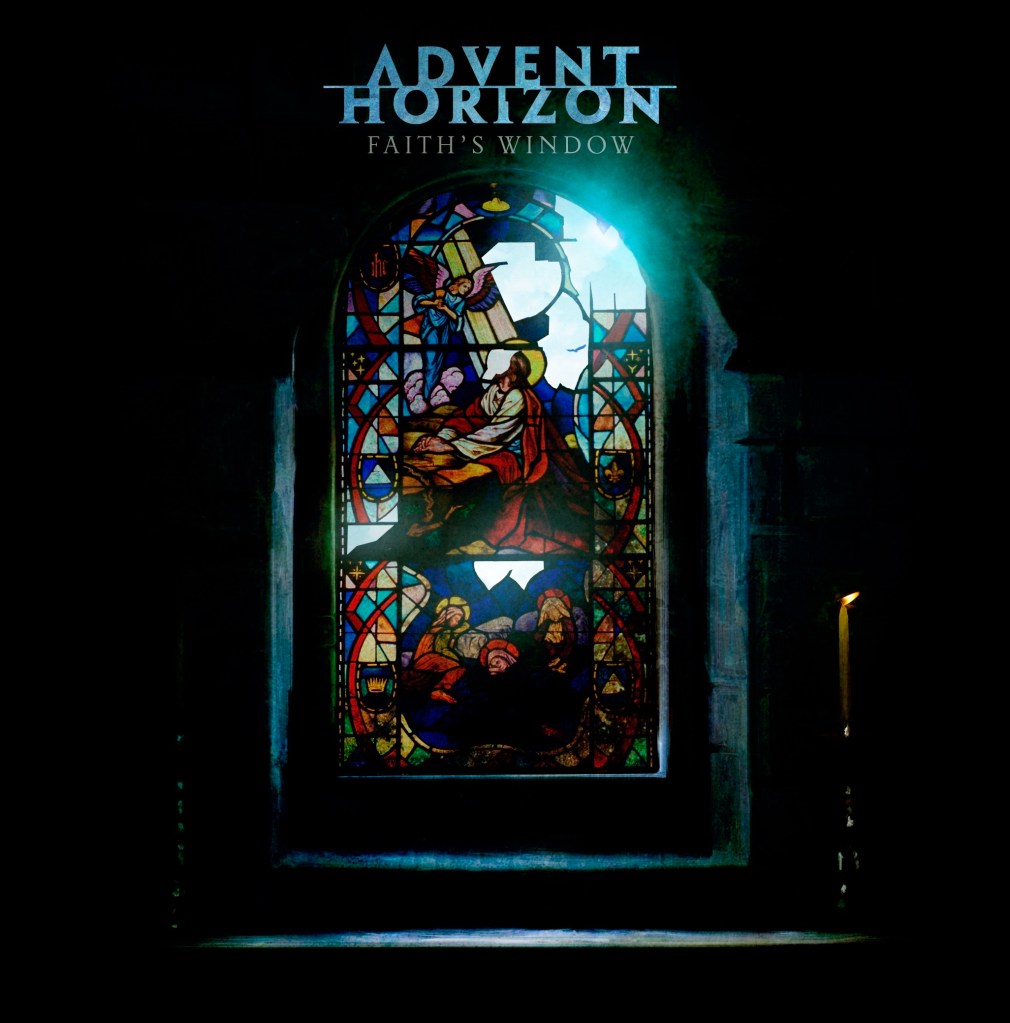
“Faith’s Window” is a commentary on my feelings about the standards of morality and purity that are pushed upon people at young ages in religious settings, and more specifically about how unhealthy sexual repression can be.
“Patience” is kind of a short general call to “take it all in” and decide for yourself what you hold dear.
“Past Life Parable” is about people’s willingness to unquestioningly follow the guidance of anyone who is in a position of power, and to give their time, money, and mental capacity freely without compensation, and without truly knowing what those resources are being used for. Obviously for me personally the context here is religious, but I think this principle applies in so many areas of life. Politically, socially, in careers, and so many other areas.
“Gravity” is about how dangerously intertwined religion and politics have become. I could elaborate, but this somehow feels adequate here haha.
“Animals” kind of an internal dialogue I had with myself while trying to process the purpose of life after Kristen’s mom passed several years ago. I feel like at its root, that’s the reason that religion exists – to give our existence a greater purpose beyond the individual days that make up our lives. I haven’t really come to any firm conclusions on any of this myself, but I have come to a place of peace with not knowing for sure. The line “we are not animals” is my confusing way of saying that for whatever reason (be it the work of a deity, or of science) we as humans have been given a greater level of awareness and intelligence than any other creature on this planet. We have the capability of experiencing the amazing things this world has to offer, and we should count every day as a gift to be lived to it’s fullest.
You mentioned in the presser that you think that people can universally relate to the themes you address in this album. What would you say are the major themes?
While this album is intensely personal to me, and while I have my own stories that are wrapped up in the songs within my mind, I do also believe that the themes are universally relatable. I’d like to think that we all want to learn all we can about the world, and feel like we’ve made the best decisions we could with the information we’ve been given. I also think that most people at some point in their life experience a life change, whether it be a change in religious belief, political leaning, career path, family, relationships, or otherwise, and we all need to occasionally look back on the path that led us to where we are now, and reflect upon the things we’ve learned along the way. At its core, that’s what this album is about for me.
I know, on a personal note, that this journey of self discovery out of organized religion is a shared one. Was the process of sharing this experience as cathartic and meaningful as I’m imagining it to be?
The answer to this is a little bit complicated for me. On the one hand, it’s incredibly rewarding and encouraging to find a community of people who have lived a similar experience to mine, and can relate on many levels. Kristen and my fellow bandmates have all been the best friend family I could ask for, and I am so grateful for the closeness we enjoy in part due to our shared experiences. I’m also absolutely honored by the number of people who have reached out to let me know that the lyrics to our new songs resonated with them deeply. I cannot describe how wonderful and meaningful it is to see these songs reaching people.
On the other hand, it’s also a little bit terrifying to “put my feelings out to the world” this way. Like most people, I crave validation and approval on some level, and also like all of us , on some level I fear rejection. When we’re talking about such personal matters, I think it is inevitable that some feathers will be ruffled along the way. I just hope that anyone who listens doesn’t feel targeted in any way by our messaging. I truly do not mean any ill-will to anyone out there. At the end of the day, I’m just a songwriter, trying my best to process my feelings in the only way I know how – through the power of music.
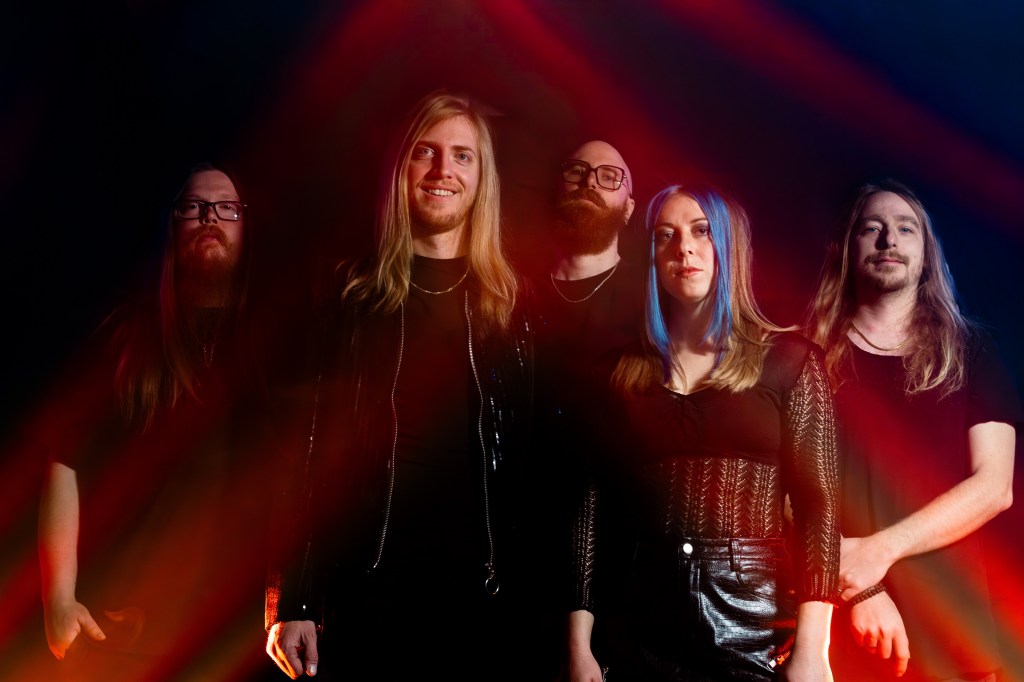
Tell me more about your writing sessions in the mountains- that sounds really nice. How do you feel like the setting tempered the sound of the album?
I’ve always been very visually inspired as a songwriter. Many of my best songs have been written from scenic mountain vistas. I much prefer this setting over the stale monotony of a basement recording studio. Something about the connection with nature helps me tap into something that can otherwise be hard to access.
In the summer of 2024, Mike and I spent many Monday afternoons together, sitting next to a lake, high in the Uinta mountains of northern Utah, armed with a fishing pole and an acoustic guitar. As Mike fished, we talked for hours about everything and nothing. Sometimes we would get into deep profound discussions, sometimes we would joke about old memories, sometimes we didn’t talk at all. As the talking (or not talking) transpired, I sat and took in the surroundings, with my guitar in hand, ready for any inspiration that might come. Some days nothing of note would happen, but occasionally something in our conversation would sound like a good lyric, or would inspire an interesting melody in my head, and when that happened, I would immediately start plucking away on the guitar and building onto the ideas. “Faith’s Window”, “Patience”, “Past Life Parable”, and “Gravity I” were all written in this way.
To be honest, those lakeside sessions are probably the most enjoyable time I’ve ever had with songwriting, and I feel like the results speak for themselves. I’d like to think that when you listen to these songs, It’s not hard to close your eyes and envision a high alpine setting, with a small lake surrounded by aspen and pine trees, snow capped peaks and storm clouds off in the distance, and an occasional light misting of rain.
I most definitely plan on repeating this process for our future albums.
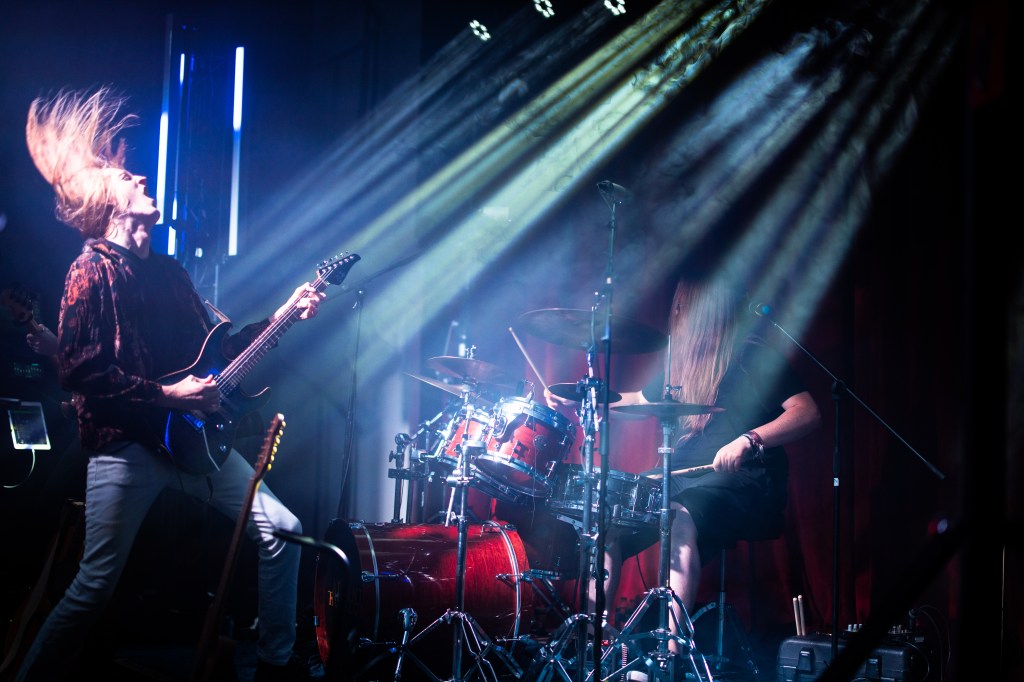
I’m really enjoying the dynamics of this album. One thing that I noticed is the inclusion of harsh vocals. How did that come about, and what dimension do you feel it adds to the music?
I’m notoriously not much of a metalhead, and I never really have been. I can handle some screams here and there in the music I enjoy, but I have always had a hard time with excessive use of harsh vocals, as i feel like they’re too often used as a replacement for good melodies, and it’s always been hard for me to get into music that lacks a strong melodic element. Mike, on the other hand has always had a deep love for all things metal. Early on in our musical lives, he discovered Opeth, along with a list of other heavier prog bands, and that love grew as he branched out to other metal sub-genres over the years. For a decade now, he has been an advocate for adding occasional harsh vocals to our music. There are actually several places on Stagehound and A Cell To Call Home where he screams, but the screams are tucked pretty far back in the mix, so most listeners don’t notice them. I’ve historically been very hesitant to add any screams/growls as a lead vocal element to any of our songs, mostly out of a fear of alienating a subset of our audience who’s musical tastes lean away from that style of singing.
With that said, I do believe that there are times when a song demands something extra to bring the emotional intensity up a notch, and sometimes a scream is the right call in those moments. “Faith’s Window” is a prime example of this. The middle section of that song was decent when I originally wrote it as an instrumental passage, but we all agreed that something was missing. In the demo sessions, Mike was insistent that a scream/yell would be the perfect addition to that section. We had him go into the vocal booth, and pressed record… and the rest is history. We all immediately agreed that the screams were exactly what the song was calling for. I remember getting chills the first time I heard him scream that part, and we actually ended up keeping most of that demo performance on the final track!
This album was mixed and mastered by the legendary and prolific Jens Bogren. What went into the decision to hire him for this record?
Jens has been my favorite producer for a long time. He’s been the production mastermind behind SO many of my favorite albums. Watershed by Opeth, Coma Ecliptic by Between the Buried and me, Affinity by Haken, Malina by Leprous, and so many more. Much of what I know about mixing music was learned through dissecting his mixes, and watching his videos. It’s long been a dream of mine to work with him on an Advent Horizon album, but as you can imagine it would be prohibitively expensive for us Utah boys to make our way out to Sweden and work with him, so that’s a dream that will have to be placed on hold until we’ve got a much larger budget to work with. In the meantime though, working with him remotely to handle the mastering of our new album, and our 2023 album A Cell To Call Home has been an awesome experience. He has an ear unlike anyone else I’ve ever encountered, and always manages to bring the best out of our songs!
With our new album in particular, he did a KILLER job with the dynamics. I believe that this was aided by the fact that our good friend Zach Boorman did an absolutely fantastic job with the final mixes for this album, so Jens had a really solid starting point to work with.
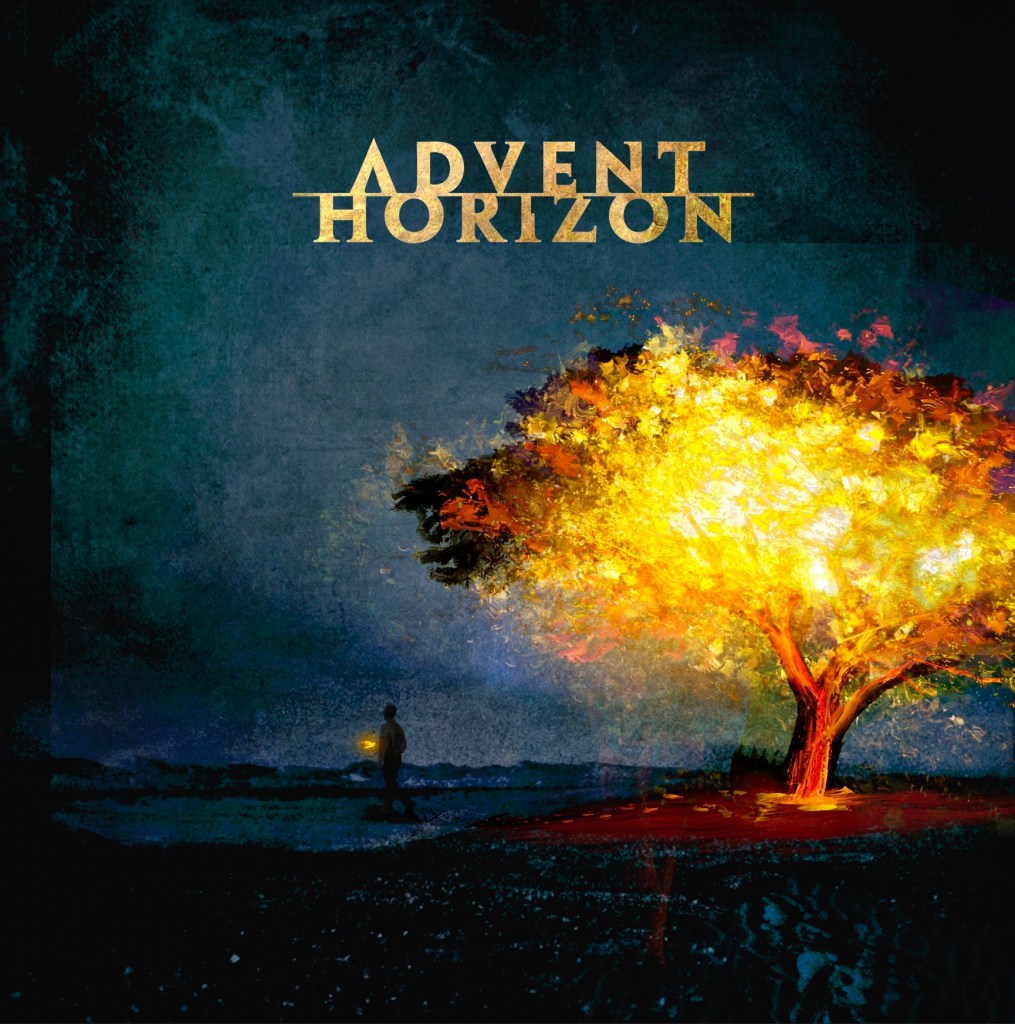
Good call on reaching out to Travis Smith, who created powerful and evocative art for your last album, A Cell To Call Home. What notes did you give Travis for the album art?
Travis, similar to Jens is legend in the metal world for his work with Opeth, Devin Townsend, Mastodon and many more. His reputation is for good reason; he is professional, friendly, and visionary. His ability to take my basic suggestions and turn them into world class pieces of art is inspiring, and it’s been an honor to work with him. For A Cell to Call Home, I mostly let him come up with the art concepts by himself, with minimal guidance. For this album however, from the beginning of the process, I knew that I wanted to incorporate imagery that was a bit more specific to the album’s meaning. Mike and I worked together to brainstorm some basic concepts, and Travis worked collaboratively with us over the course of several months last year to put them together.
The album cover in particular I am extremely proud of. I wanted something that showed a visual representation of me and Kristen, and our choice to leave our roots behind, and “fall together” to the “lone and dreary world” below. I’m also very proud of the image for “Past Life Parable” which depicts a man walking away from a glowing tree (which resembles the Mormon “tree of life” or the “burning bush” from the story of Moses in the Bible). He’s walking towards the left hand side (contradicting the Mormon saying “choose the right”, and he’s holding to a Goldenrod flower (a nod to the Mormon saying “hold to the iron rod”). I’m sure most of these details are subtle enough that they won’t be noticed by the majority of people, but for me personally, they’ve given deeper meaning to the album, and I’m grateful to Travis for humoring our wild ideas!
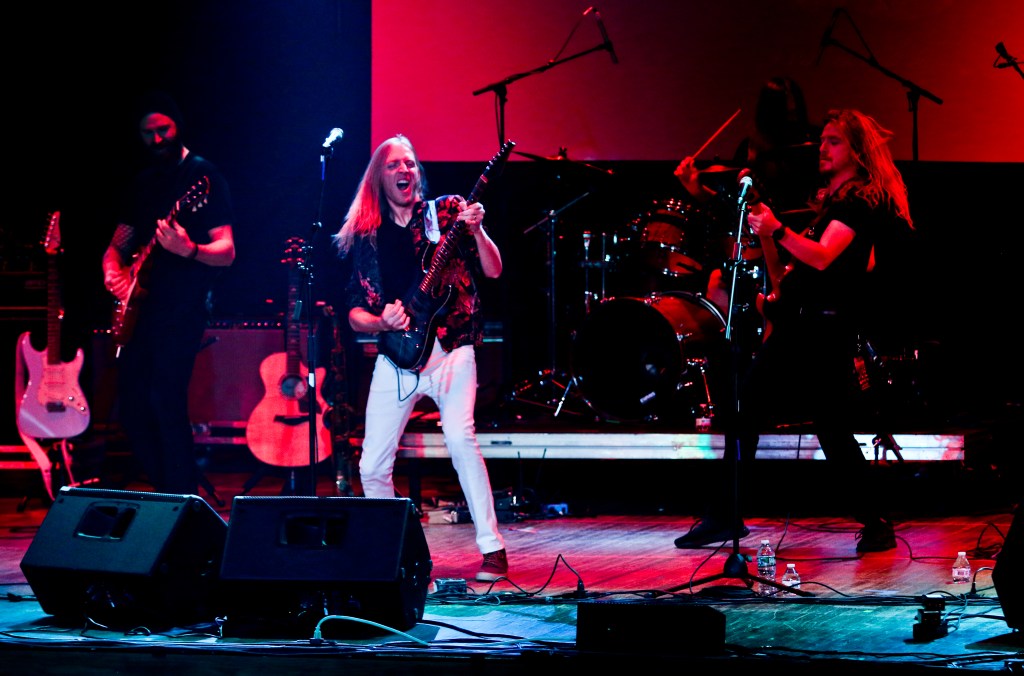
Will we have some chances to see this album performed live? Any possible touring plans?
We will absolutely be performing live this year! We have a hometown album release show scheduled on 5/22 in Midvale UT. Tickets are available on our website for that. We will also be playing in San Francisco on June 13th at a cool little venue called Club Fox. Both shows will include a full performance of our new album, in addition to some songs from A Cell to Call Home and Stagehound.
We’re unfortunately not yet to a point where we have enough of a following in most areas to justify booking our own tour (working on that though!). Because of this, the only way we’ll be touring is if I can find a way to get us on as the opener for a larger touring act. We would absolutely love to do this, but we’re just at the mercy of the right band asking us. If anyone has any leads in that department, please let me know!
I am hoping to at least do another show or two throughout the course of this year around the country. Stay tuned!
Advent Horizon’s new album, Falling Together, will be out May 15, 2026. Pre-order the album here.
 Proglodytes