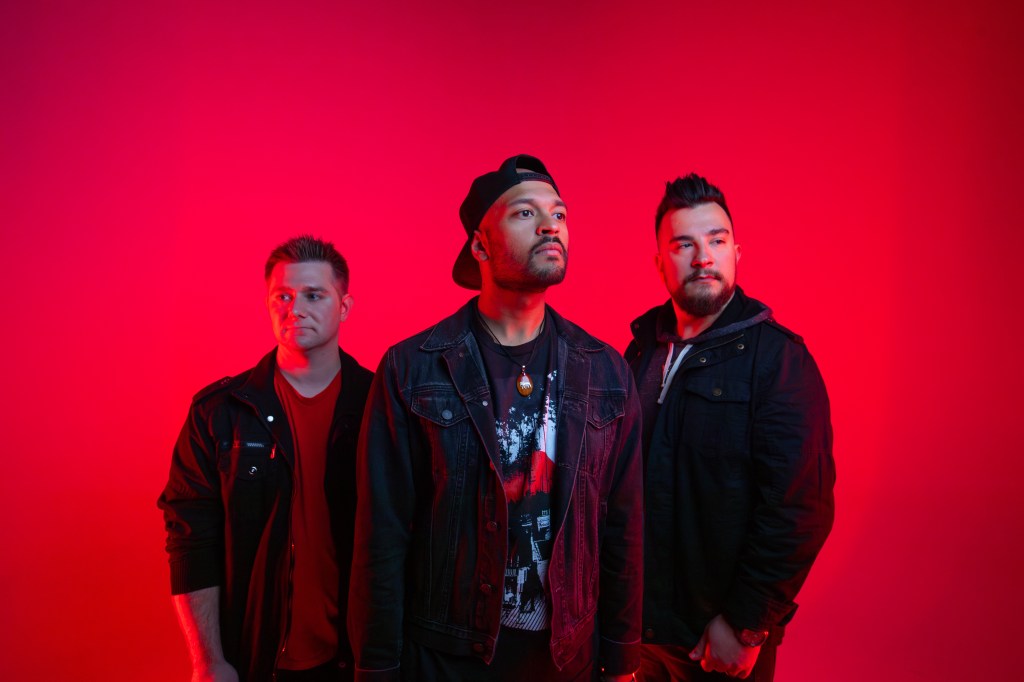
Vikram Shankar, the immensely talented mind behind Lux Terminus, is no stranger to the progressive music world. His prolific presence across prog and prog-adjacent scenes is impossible to ignore—whether he’s playing with Redemption, Silent Skies, or Ross Jennings, or handling keys for Pain of Salvation. He’s also composed for several media franchises, including some high profile video games.
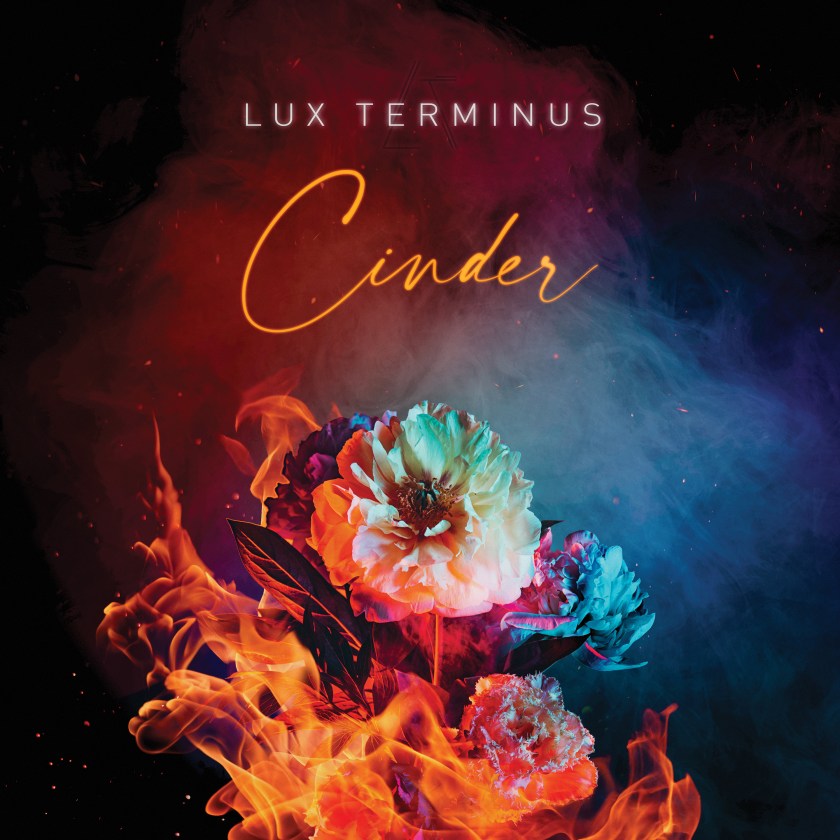
Despite being immersed in music professionally, Vikram remains an enthusiastic listener and interpreter of music. You’ve likely seen Vikram perform passionate covers of some of his favorite songs- as a person with a true artist’s heart, his passion and energy is palpable. This same excitement and artistic depth radiates through Cinder, the latest release from Lux Terminus and a follow-up to their 2018 debut The Courage to Be.
On Cinder, Vikram aimed for refined clarity, and the result is a cinematic, ambitious, and emotionally rich record. We spoke with him about how Lux Terminus has evolved over the past few years and what he set out to achieve with this bold new chapter.
I read that this album has been in development for 4 years. How do you think Lux Terminus has developed over this time?
A lot has changed since the Courage to Be days! I wrote the first album while I was still in undergrad, and while the debut introduced the basic sound palette and ethos of the band, there has been a lot of growth since then. All of our worlds have expanded not just as artists but also as music listeners, and we are avid fans of the “new generation” of progressive musicians. More than anything else, though, Cinder sees us solidify our identity – the first album was written in a time when we were still “finding ourselves,” as it were.

Is there a clear intention in composition and sound design with this particular record, compared to prior efforts? How do you feel it differs from the work you’ve done previously?
A lot of the progression from the first album has to do with the origin story of the band. I founded Lux Terminus in 2016 with the humble goal of playing cocktail jazz at events and public gatherings. While the music quickly grew into more of a progressive metal identity, the core of much of The Courage to Be reflects this humble beginning – simpler arrangements, less instrumental layering, and a more “acoustic” character. The final tracks written for the first album (the title track and “Electrocommunion”) were an initial hint of where my vision for the group was headed, and Cinder is in many ways a fulfillment of that. The soundscapes are much more ambitious, the heavier parts more punishing, the cinematic scope more sprawling, and the songwriting almost entirely avoiding any form of “verse-chorus” structures altogether in favor of linear narrative journeys.
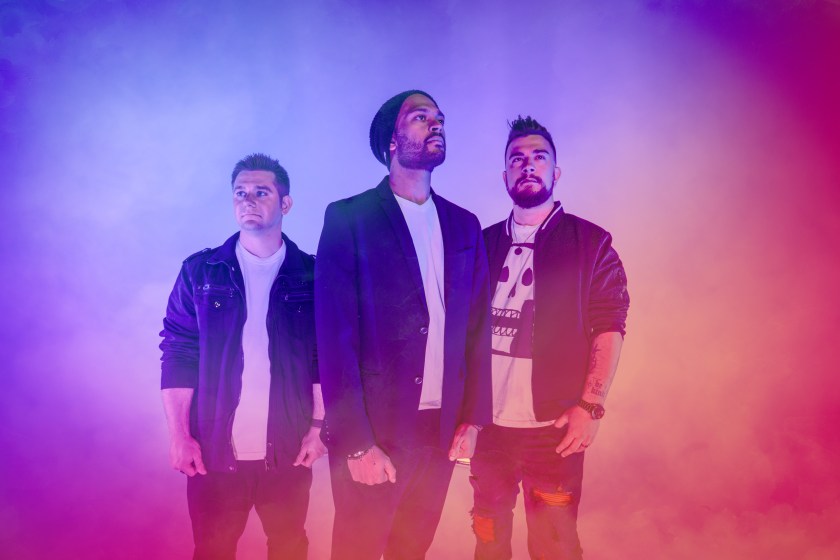
Tell me about your bandmates, bassist Brian Craft, and drummer Matthew Kerschner. What do you feel like they each uniquely bring to the table in this project?
Brian Craft and Matthew Kerschner are dear friends of mine – my first “serious” band experience was joining the two of them (and guitarist Eric Potapenko, who now plays in Adam Lambert’s band) in an instrumental quartet called Gravity, well over a decade ago. They were a natural choice for me when I formed Lux Terminus – not only do we have a strong personal connection, and not only are they great players on their instruments, but they present musical perspectives I value immensely. Their voices on their instruments differ enough from mine that their musical performances give a freshness to the songs that I have come to rely on over the years.
Explain the writing process for this project. Is it more collaborative, or more collective, or some mix of both?
The writing process for Lux Terminus, especially now, tends to start from my end, where I create what have lately become extremely elaborate and thoughtful demos that, ideally, are fully fleshed out enough to function as final pieces of music. I also typically intend for my own demo keyboard performances to at least be appropriate quality to be on the final record, although my iterative process of revision from that point is endless and tedious – my standards for myself are borderline psychotic, I feel sometimes! These demos are sent over to the rest of the band, who cultivate their parts, which ideally is less a question of regurgitating a MIDI performance and more a question of interpretation, letting their creativity run wild and enhance the writing. I find it valuable that the other members of the band have their own voices and identity that shines forth in our music.
This album features some stellar performances from several guest musicians- Ross Jennings (Haken), Jorgen Munkeby (Shining), John Pyres, and Espera (singing trio known for their work with Sleep Token and others). How did you choose these musicians, and what did you feel like each of them brought to the record?
One of the greatest joys of music making for me is collaboration, and I love expanding the family and working with diverse artists. Ross and Jon are both artists I have worked with before: on Ross’s solo album and Jon’s band Threads of Fate respectively. I wanted to bring them together to serve as narrative yin and yang on “Catalyst,” a song that is intended to voice two conflicting inner voices. They elevated the track in ways I could never have imagined. I have been a fan of Jørgen’s playing (and singing) for years, and as saxophone is an instrument I have wanted to bring into Lux Terminus’s music since the beginning, the choice was both natural and inevitable. Espera has been a pipe dream of mine for a few years now, as Sleep Token has become my favorite band and I absolutely adore Espera’s work both with that outfit and beyond. “Jupiter” is a song whose origins date all the way back to 2017, for a never-released solo album, and it originally was intended to have vocals. Years later, I found that the song was once again begging for a vocal touch, and Espera added a level of ethereal beauty, class, and emotional power that simply stuns me every time I listen to it. I feel extremely indebted to Lynsey, Paige, and Mattie for their unparalleled artistry.
Speaking of, do you feel like the work you have done with Pain of Salvation and Silent Skies has informed your own songwriting in any ways? Any lessons learned from playing with those bands that have helped you with your own writing and production?
Working with Pain of Salvation and Silent Skies in the years between The Courage to Be and Cinder has certainly informed my process with Lux Terminus, although I would say Silent Skies has done so in a more drastic way, especially pertaining to atmosphere, narrative, and aesthetic. The process of making three Silent Skies albums from 2020-2023 helped develop my own identity as a musician, especially in terms of my prioritization of emotion over flash. To be clear, I love flashy playing, and I find the contrast between “feel” and “technique” to be a false dichotomy anyways, but I do find the most musical joy in emotional storytelling and imbuing every chosen note with meaning and passion.
Silent Skies also expanded my production and arranging chops dramatically, as we self-produce and arrange all of our music, and whether it’s analog synthesizers and modular gear, software wizardry, or simply knowing what to listen for, making Satellites, Nectar, and Dormant was a crucial part of Cinder being the way it is.
This album covers a lot of thematic territory, ranging from nostalgia to mental health. Tell us about some of the themes of this record, and why you chose to highlight them in your writing.
I find the most satisfaction making music with meaning, expressing themes that are important to me personally. It’s something that comes across a lot in Silent Skies as well- being radically honest about who I am, the things I believe, the struggles I experience, voicing these things and painting them with musical colors. I believe that putting these feelings in music and sharing them with the world can have a profound effect – the more that we are honest with the world about who we are, the more kinship we can find with each other, and the more that we can realize we are not alone in the journeys we face.
The Courage to Be dealt with the struggles of self-actualization and self-acceptance in the face of mental health struggles, and Cinder deals with much of the same, especially the resilience to find the joy and spark in life when both inner and forces threaten to tear you down. Lux Terminus, as (mostly) instrumental music, tends to express these things in less obvious and more impressionistic ways, but it’s still something very important to me. I don’t believe there is any right or wrong way to make art, or any artistic intent that is any less or more worthy than any other, but for me, this is the way I feel the most satisfied and the most spiritually connected.
One thing I really appreciate about you is your continued passion for new music. I understand when music becomes a person’s job, it sometimes can be difficult to remain a fan and continually look for new music. What do you think helps you maintain that enthusiasm and interest in new music and bands despite being surrounded by it as a professional artist?
I suppose I have been fortunate in that it has never really been a conscious effort for me to stay engaged in new music. I truly love music and art and exploring new things and finding fresh inspiration is a source of deep joy for me. That being said, sometimes particular genres can get fatiguing, especially metal and progressive music, since I spend so much time immersed in those worlds. It’s fortunate that there is an entire universe of music out there to explore, diverse and multifaceted and rich with inspiration, and spending time in other genres helps to develop a well-rounded, contextualized, and passionate relationship with music. This can be anything from classical to electronic, pop to jazz, and other things that might be even more of a surprise for listeners to find I enjoy, like some pop country! Sometimes these things even find their way into my own music, such as Brooklyn drill hip-hop influences in some brief moments of Cinder. I find value in all styles of music and find something inspiring and enjoyable in just about anything out there – for which I find myself extremely grateful, as it makes my musical life a lot more interesting.
Going along with that- are there any artists that are currently inspiring you in a major way?
It’s no secret that Sleep Token has been a major source of inspiration for me, not just in terms of music, but also their vision and creative bravery. I love seeing proof positive of the concept that music listeners are a more open-minded bunch than industry cynics have believed for years, and that music as diverse, strange, and puzzling as Sleep Token can find its way into modern music’s mainstream lens. Beyond that, but sticking with metal and rock music, I absolutely have been enamored with Bilmuri’s approach to genre-bending and creating infectious, powerful music that breaks rules while remaining extremely accessible. I believe Exploring Birdsong, with their synthesis of compositional intricacy and artfully emotional songwriting, are on the cusp of becoming progressive music’s new obsession. All of us in Lux Terminus have also been really enjoying the new releases from Novelists, and the way that they have integrated pop melodicism into sophisticated and flashy musicianship. Outside of metal and rock, I find a lot of continued inspiration from artists like Johann Johannsson, Olafur Arnalds, Taylor Swift (yes, really), Tangerine Dream, BANKS, Jon Hopkins, and Tigran Hamasyan.
Lux Terminus will be performing live in 2025! Tell us where we can catch you and how!
We will be playing our first shows outside the USA this year, first at Midsummer Prog in Maastricht, NL in May, and then at the inaugural ProgStorm Festival in Montreal. And beyond that – we shall see!
Bonus Questions: You’ve done some work on video game soundtracks. What are some of your all time favorite video game soundtracks and why?
I have – for those who don’t know, my “day job” of sorts is composing for media, for which I’ve most recently completed work on Space Marine II, Painkiller, and the upcoming Jurassic Park: Survival. Those scores may give some insight into the kind of game scores I enjoy: cinematic, ambitious, and emotional. The score for the Mass Effect games was an early favorite, and when I was growing up playing games, I enjoyed the scores for games such as Medal of Honor quite a bit as well. Ghost of Tsushima is another game with an absolutely exquisite and extremely powerful score, as well as Assassin’s Creed: Valhalla – both games that have very particular “sonic flavors” that work strongly in tandem with the narrative. In a completely different vein, the score for Astro Bot is absolutely brilliant, with a lot of surprising intricacy and ambition buried within its rather bubbly exterior. My love of a score like that might not be such a shock considering my love of pop music of all flavors, I suppose!
What prog rock or metal band of yesteryear do you feel like deserves more love/attention?
If the 2000s counts as yesteryear, and assuming it’s a conflict of interest for me to nominate either Pain of Salvation or Evergrey, I wish Fellsilent got more attention.Obviously as a predecessor to both Monuments and TesseracT, these guys found their mark and have moved on to bigger things, but the Fellsilent music holds up remarkably well to me even today.
To-Mera is another artist from the last 10-20 years that I think had something really special happening compositionally and I rarely see mentioned anymore, unfortunately.
Going back a few more decades: this is likely a very bizarre answer to this question, as they are one of the most beloved bands of all time (and not typically considered prog), but I wish people listened more deeply to the deep cuts of Led Zeppelin. I find that especially the music made from 1971-1977 has an ambition and artistic daring, one might even say a progressive-ness, that Zeppelin’s detractors rarely acknowledge. Zeppelin is also a fairly trendy band to dismiss because of the allegations of plagiarism, which I can certainly understand, but erase all of the allegedly-plagiarized material from their discography and you still have a formidable and interesting catalogue of music with lots of depth and intrigue.
Thanks to Vikram Shankar! Please check out Lux Terminus’s latest release, Cinder, here on Bandcamp and make sure to check out Vikram’s other projects as well.
Lux Terminus’s online social media:
 Proglodytes